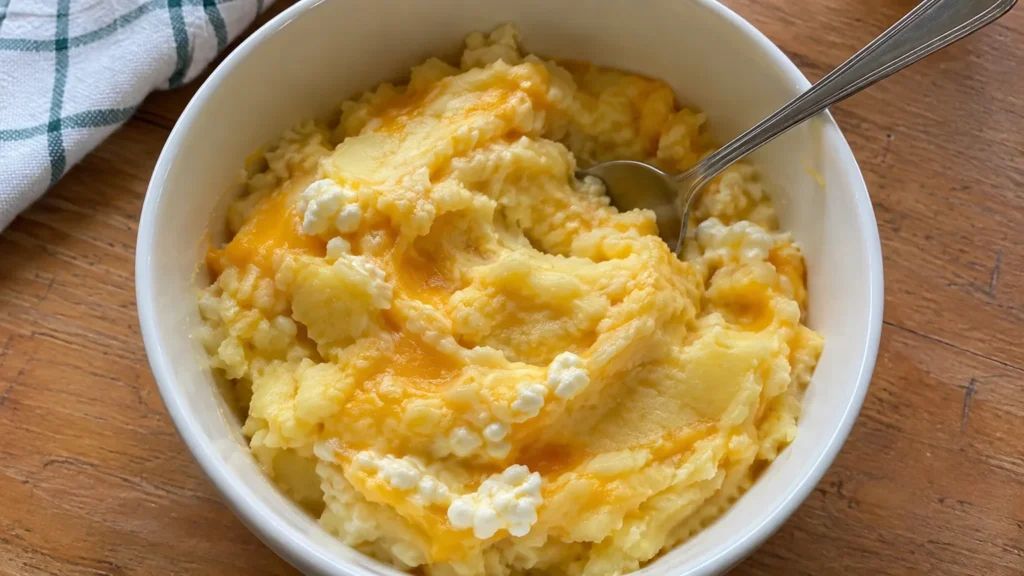
These high protein cheesy mashed potatoes are still a familiar potato side, with butter, cheddar and a soft, scoopable texture. Cottage cheese and Greek yogurt add protein without using a powder. Serve them next to turkey or another main dish, and keep the portion in mind: the recipe makes eight side servings rather than eight full dinners.
Table of Contents
Why high protein cheesy mashed potatoes work
The potatoes provide the body, so there is no need to replace them with cauliflower or a protein ingredient. Cottage cheese brings moisture and mild flavor, while yogurt adds a little tang. Cheddar gives the finished dish a clear cheese flavor even though only half goes into the mash and the rest becomes the topping.
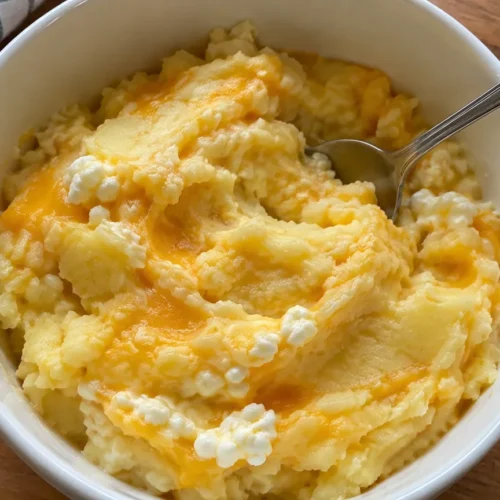
Blending the cottage cheese with milk helps reduce visible curds. If a few curds do not bother you, pulse briefly or stir the mixture by hand. The featured illustration shows some small curds, which is a realistic result of a shorter blend. The potatoes themselves should stay out of the blender because that can make their texture gluey.
Potatoes, dairy and useful substitutions
Measure the potatoes after peeling. Buying about three pounds gives you room for trimming, but the edible quantity in the card is two and a half pounds. Cut them into similar-sized chunks so the smaller pieces do not fall apart while the larger ones are still firm. Yukon Gold potatoes give a buttery color; russets can work with a slightly fluffier texture.
Use plain Greek yogurt, not a sweetened variety. The nutrition estimate uses nonfat yogurt, 2% cottage cheese and regular cheddar. Different dairy fat levels change the numbers. A lactose-free version of the same products may be useful, but this remains a dairy recipe. Plant-based cheese and yogurt do not provide the same protein or texture by default.
Tips for high protein cheesy mashed potatoes
Start potatoes in cold water so they heat more evenly. A gentle simmer is easier on the pieces than a hard rolling boil. Drain thoroughly, then briefly return them to the warm pot to remove surface moisture. That step helps the mash absorb the dairy instead of becoming watery around the edges.
Mash by hand and fold gently once the dairy goes in. Stop when the ingredients are mixed; repeatedly beating the potatoes does not make them smoother in a helpful way. Taste before adding more salt because the cheese already contributes some. The oven step melts the topping and heats the mash, and the listed timing is an estimate rather than a kitchen-tested result.
High-Protein Cheesy Mashed Potatoes
Ingredients
- 2 1/2 lb Yukon Gold potatoes peeled edible weight; cut into 1-inch chunks
- 2 cups 2% cottage cheese
- 1 cup plain nonfat Greek yogurt
- 1/2 cup 2% milk
- 1 cup cheddar cheese, shredded divided
- 2 tbsp unsalted butter
- 1/2 tsp garlic powder
- 1/2 tsp salt
- 1/4 tsp black pepper
Instructions
- Put peeled potato chunks in a large pot and cover with cold water by 1 inch. Bring to a boil, then simmer gently for about 15–20 minutes until very tender when pierced.
- Meanwhile blend cottage cheese with milk until mostly smooth, or leave some curds if preferred. Drain potatoes well, return to the warm pot over low heat for 1 minute and shake gently to evaporate surface water. Remove from heat.
- Mash potatoes by hand with butter, garlic powder, salt and pepper. Fold in cottage cheese mixture, Greek yogurt and half the cheddar. Do not blend the potatoes. Transfer to a 2-quart oven-safe dish, top with remaining cheddar and cover.
- Heat in a 350°F oven for roughly 10 minutes, then uncover for about 5 minutes to melt the cheese; check that the center is hot throughout. If reheating a cold assembled batch, allow extra time and heat to 165°F. Divide into 8 equal portions.
- Serve promptly or hold at or above 140°F. Refrigerate shallow portions within 2 hours (1 hour above 90°F), use within 3–4 days and reheat to 165°F.
Notes
Make-ahead and reheating advice
For a holiday dinner, make the mash the day before and refrigerate promptly in a shallow covered dish at 40°F or below. Keep the topping ready in a separate container if convenient. Use an oven-safe dish suited to the temperature change, or transfer the cold potatoes before baking. A deep, cold casserole takes longer than the quick finishing step in the card.
Reheat covered until the center reaches 165°F, then uncover to melt the topping. Stir in a small amount of milk if the mash seems dry, counting the extra milk separately. Use leftovers within three to four days. Our meal-prep guide covers practical portions, and safe cooking temperature guidance provides the safe reheating target.
Serving and nutrition notes
Pair the potatoes with garlic herb roasted turkey breast and a vegetable side. The potatoes contain carbohydrates, and there is no reason to call them low-carb. The dairy increases the protein in a side serving, but a full meal still depends on the rest of the plate. Divide the entire finished dish into eight roughly equal portions.
Keep hot potatoes at or above 140°F for serving, or refrigerate within two hours, one hour above 90°F. The estimate counts all dairy and butter, but it cannot exactly model nutrients lost in boiling water. Read our nutrition-estimate guide for more detail. The featured image is an AI-generated illustration, not an owner-taken photograph or evidence of kitchen testing.