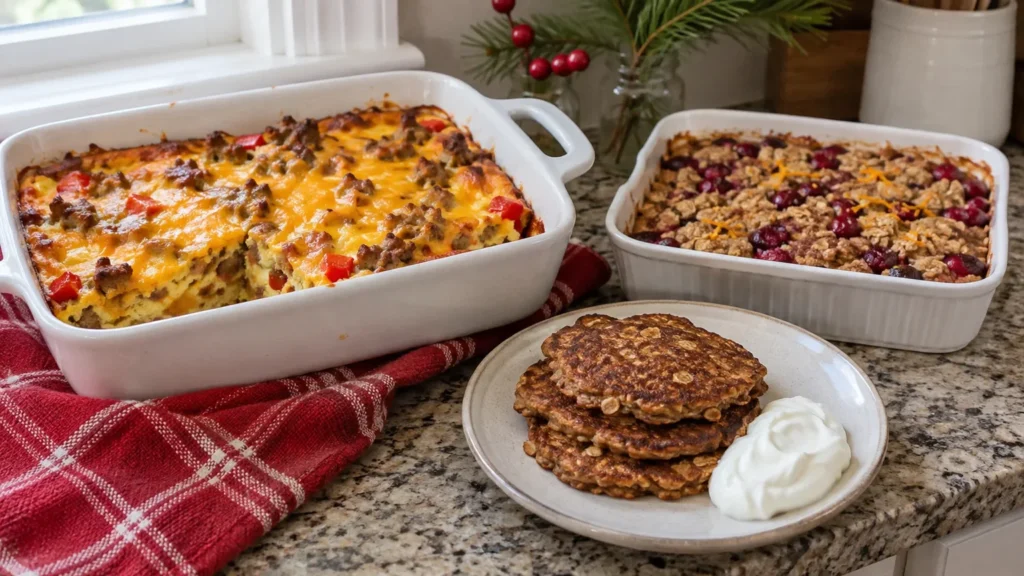
The most useful high protein Christmas breakfast ideas are the ones that fit your morning. A tray that can soak overnight, oatmeal that reheats in portions and pancakes cooked a day ahead all move work away from the busiest hour. Start with one main dish, add fruit or another familiar side and leave enough oven time for the center of a cold casserole to cook.
Table of Contents
High protein Christmas breakfast ideas: overnight casseroles
The overnight sausage, egg and cottage cheese breakfast bake is a savory choice when you want breakfast from one pan. Brown and handle the sausage as directed, assemble the mixture and refrigerate it promptly. Putting a casserole together in advance does not mean leaving it on the counter overnight. Keep the refrigerator at 40°F or below and use the recipe’s specific overnight window.
The cinnamon roll French toast casserole is the sweeter option. Bread cubes need their planned soak to absorb the custard, while the yogurt glaze stays in a separate covered container. Do not drizzle raw egg custard on the baked portions. Choose one of these casseroles as the main dish, or serve smaller amounts of both if you have enough oven space.
Baked oatmeal that reheats in portions
The cranberry orange baked protein oatmeal works well when family members eat at different times. Bake it ahead, cool promptly and refrigerate in six portions. Reheat only the number you need so the whole tray is not warmed and cooled repeatedly. A small amount of milk alongside a portion can make the breakfast feel less dry without changing the entire batch.
Oats and fruit bring carbohydrates and fiber, while yogurt and eggs contribute protein. There is no need to describe oatmeal as low-carb to make it useful. If you add nuts, maple syrup or another yogurt topping, count those separately from the recipe estimate. For another familiar make-ahead option, browse the existing HPE breakfast recipes before choosing your final menu.
Pancakes and French toast without a busy griddle
Cook gingerbread protein pancakes in advance if you want the flavor without standing over a skillet while everyone else eats. Cool them promptly in a single layer, then refrigerate covered rather than stacking a large steaming pile. Reheat in a covered oven-safe dish or microwave until hot throughout. Add the reserved yogurt at serving, not before reheating.
For a less seasonal alternative, the library includes cottage cheese oat pancakes. Follow that recipe’s own quantities and instructions rather than mixing parts of two batters. The cinnamon French toast casserole is another way to serve a pancake-style sweet breakfast from a pan. It needs more morning oven time, so choose it when your schedule has room for a full bake and rest.
What to prepare the night before
Check the recipe and pan before you start. Metal is useful for a refrigerated casserole that will go into a hot oven; cold glass can be damaged by a sudden temperature change. Measure dry spices, set out nonperishable serving pieces and clear a refrigerator shelf. Keep eggs, cooked meats and dairy chilled until their preparation step. Clean utensils and surfaces after handling raw eggs or meat.
For pancake morning, mix dry ingredients ahead and store wet ingredients as the recipe directs. Do not assume that every batter benefits from an overnight rest, especially one with baking powder. For baked oatmeal, baking ahead and reheating is a clearer plan than leaving an improvised raw mixture overnight. Label the containers so another family member can help without guessing what is raw, cooked or reserved for topping.
Reheating and serving high protein Christmas breakfast ideas
Reheat cooked casseroles and leftover breakfast portions to 165°F in the center. A hot edge or a brief microwave cycle does not guarantee the middle is ready. Stir or rotate microwave portions where practical, let heat distribute and check with a thermometer. The safe cooking temperature guidance explains the targets; each recipe also gives guidance for its ingredients and method.
Keep hot food at or above 140°F if you are holding breakfast for late arrivals. Otherwise, refrigerate perishable food within two hours, or one hour if the temperature is above 90°F. Store cooked leftovers at 40°F or below for three to four days, counting time before Christmas morning. Our meal-prep guide has more detail on portioning and safe storage. A small serving tray that gets refilled is easier to manage than a buffet left out all morning.
Balance protein with the foods you already enjoy
Pick one protein-containing main and let familiar sides complete breakfast. Fruit, toast, a small pastry or a cup of milk can all have a place. You do not need to turn every item into a protein recipe. For a savory option from the regular library, consider ham and egg breakfast sandwiches and follow that recipe’s own make-ahead directions.
Compare serving definitions before comparing macro values. Three small pancakes with their yogurt topping are different from one casserole square. The numbers are ingredient-based estimates, not measurements of what every person will eat; read our nutrition-estimate guide. Find the rest of the menu in the Christmas recipe collection. The featured breakfast spread is an original AI-generated illustration, not a photograph of a family-tested meal.