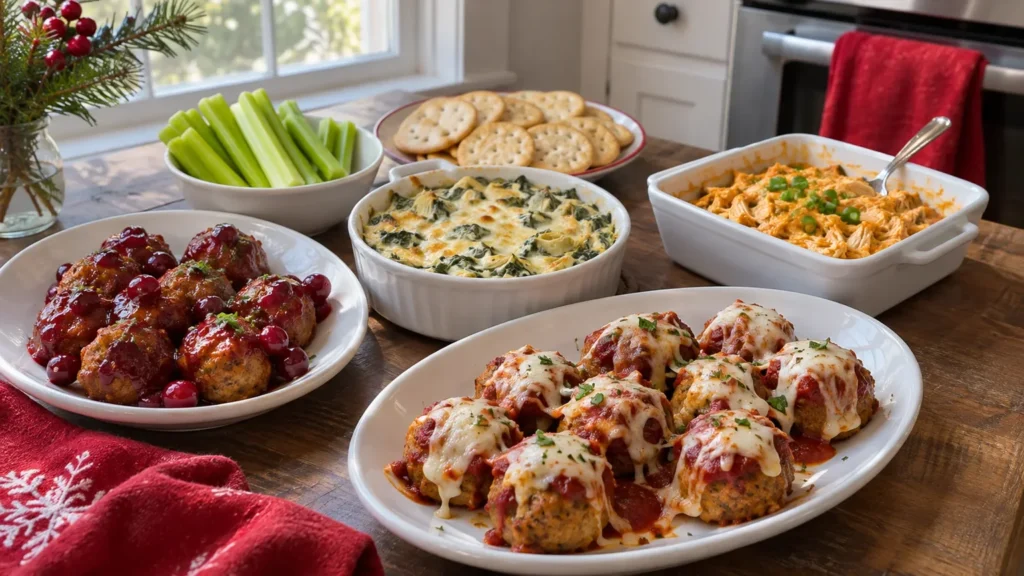
These high protein holiday appetizers are built around foods that are easy to share: warm dips, small meatballs and chicken bites. A useful party menu also needs a holding plan, enough serving utensils and room in the refrigerator. Choose a few dishes with different textures rather than making several hot casseroles that all need the oven at once.
Table of Contents
High protein holiday appetizers: make-ahead dips
The high-protein spinach artichoke dip gives you a mild, warm option with vegetables and a cheesy top. Squeeze the spinach thoroughly and drain the artichokes before mixing. Assemble it ahead only as directed, keep it refrigerated and allow extra baking time for a cold center. Put crackers and vegetable sticks on separate dishes so guests can choose their own combination.
The cottage cheese Buffalo chicken dip is the spicy choice. Blend the dairy base before folding in fully cooked chicken. Regular cayenne hot sauce is different from a butter-based wing sauce, so check the ingredient list and do not assume the nutrition is identical. A mild dip alongside the Buffalo option gives guests who prefer less heat something to enjoy.
Meatballs you can portion before guests arrive
The cranberry glazed turkey meatballs provide a sweet-tangy holiday flavor in small baked portions. Cook them safely, cool promptly and store with the sauce separate if that helps you portion them. Reheat thoroughly before moving into equipment used for hot holding. A slow cooker should not slowly bring a cold batch through the temperature danger zone.
For a different main ingredient, maple mustard pork meatballs can be served in smaller appetizer portions. Their card uses a dinner serving of four, so adjust your party count and nutrition comparison accordingly. Ground pork requires 160°F during the initial cook, while ground turkey requires 165°F. Whole pork cut guidance does not apply to ground meat.
Finger foods beyond a bowl of dip
The mini chicken Parmesan party bites are small chicken meatballs with marinara and mozzarella on top. Bake the chicken to the safe temperature before adding the final cheese layer. A platter with cocktail picks helps, but keep forks and napkins nearby because the topping can still be messy. Set the picks in a clean container rather than touching all the food while arranging them.
For a cold option from the existing library, look at tuna cucumber bites or smoked salmon yogurt dip with vegetables. Follow each recipe’s ingredient and storage instructions. Cold seafood and dairy need active chilling too; a dish does not become safe for room-temperature display simply because it is served cold.
Transport, hot holding and cold holding
Choose the transport method before cooking. Cold food should travel in an insulated cooler with enough ice packs to stay at 40°F or below. If you transport hot food, use equipment that actually maintains at least 140°F and check with a thermometer. A towel around a casserole may slow cooling, but it is not a measured holding system. Reheating at the destination is often easier when a kitchen is available.
Reheat previously cooked foods to 165°F before hot holding. Use clean utensils and keep raw ingredients away from ready-to-eat platters. The USDA reheating guidance explains why slow cookers and chafing dishes are for holding already-hot food. The safe cooking temperature guidance covers initial cooking targets. Plan where each dish will sit and how it will stay hot or cold for the actual length of the party.
A simple appetizer-party planning checklist
Choose the menu: pick one dip, one bite-size protein option and a fresh or cold dish. For a snack before dinner, smaller amounts are sensible; for a party that replaces dinner, plan a fuller spread and ask about appetites and dietary needs. Do not rely on a universal number of bites when a small meatball and a large scoop of dip are different amounts of food.
Check the kitchen: list pan sizes, oven temperatures, refrigerator space, thermometers, coolers and serving utensils. Make sure hot dishes do not all need the same finishing time. Read labels for milk, egg, wheat, fish and other allergens. Keep dips and dippers separate, and label the ingredients clearly enough for guests to make their own choices.
Write the timeline: label preparation dates, decide what will be reheated and put a reminder beside each platter for its serving time. Set out small batches and refill with clean dishes rather than topping up food that has been sitting out. Refrigerate perishables within two hours, or one hour above 90°F. Discard food that exceeds those limits instead of returning it to the refrigerator.
Serving high protein holiday appetizers with realistic portions
Keep vegetables, crackers and bread in the plan if your guests enjoy them. They add variety and make the dips easier to share. The recipe macro panels count the defined portion of the recipe itself, so dippers and extra sauces may be separate. A protein-focused appetizer menu can still contain carbohydrates, fat and dessert; no blanket low-carb claim is intended.
Use cooked leftovers within three to four days at 40°F or below, including storage time before the event. The meal-prep guide helps with that planning, and our nutrition-estimate guide explains calculated values. For the rest of the meal, browse the Christmas recipe collection. The featured appetizer spread is an original AI-generated illustration, not a photograph of a personally tested party menu.